Flower
The nectary
Glands at the base of the flower secrete nectar. Its sugars, aromas and pollen depend on the plant species, and that is where a honey's identity starts.
Botanical origin · set by species
Rare monofloral honeys
From protected floral terroirs to the world's finest creations.
Scroll to enter the drop
Twelve worlds · one honey core
Every flower, product, analysis and terroir orbits the honey core. Turn it, then pick a world to fly in.
Drag to rotate · Ctrl + scroll to zoom · Click a world
Enter the house
Mielovia Honeys
Fifty-nine flowering plants, from mango to buckwheat. Each one carries a status that only laboratory analysis can confirm.
The Honey Library
A monofloral origin is never assumed. Some plants give too little nectar, or bees rarely visit them. Each honey carries a status, and only lab analysis of a lot can confirm it.
Demonstration content
Statuses and typical colour classes (USDA Pfund scale) are indicative and must be validated by your melissopalynology laboratory before publication.
 Featured honey · example lot
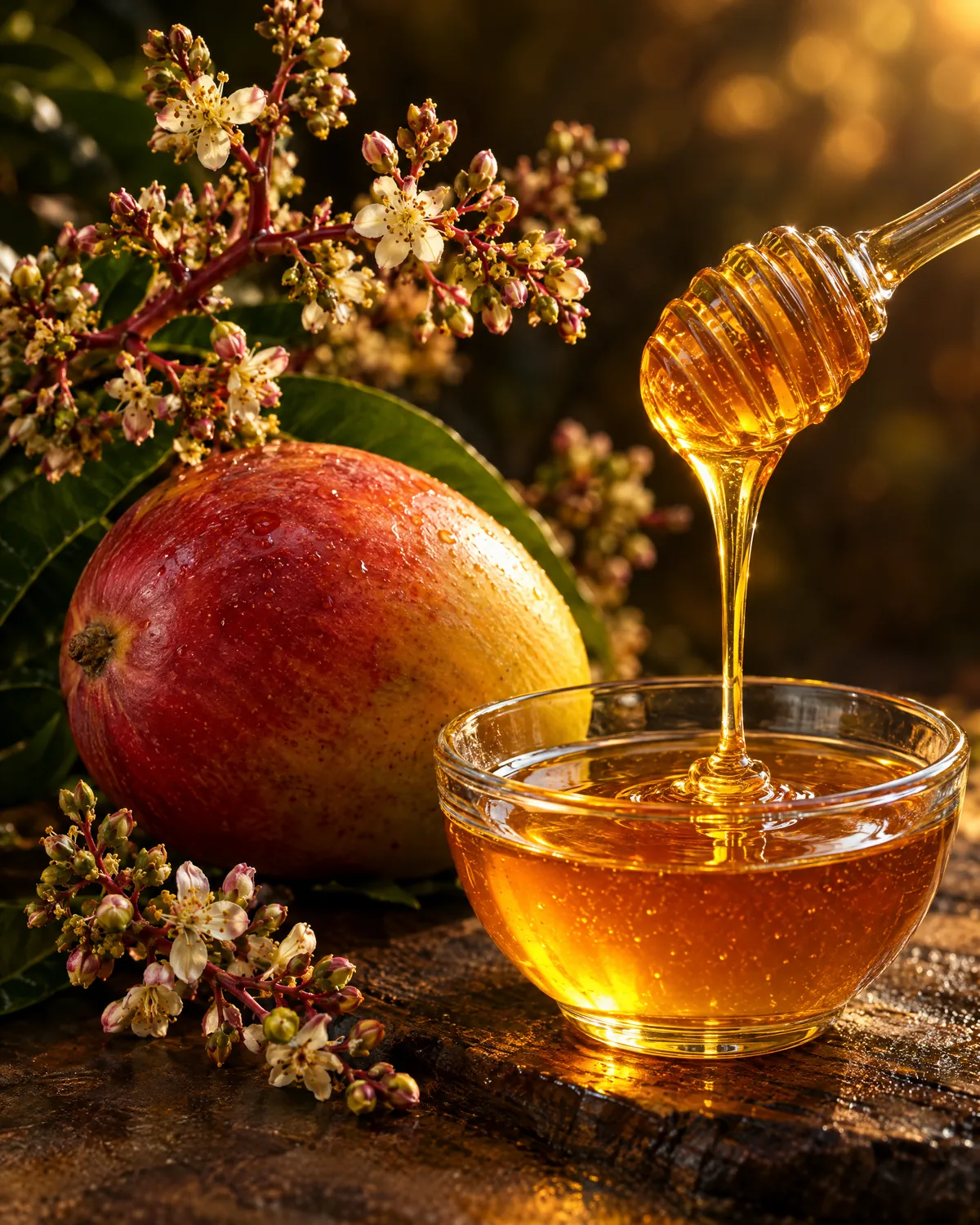
Mango Blossom Honey
Mangifera indica · Boeny, Madagascar
Ripe mango, apricot and hibiscus, with a long finish. Sensory radar, chocolate pairings and the lot's analysis sheet.
Featured honey · example lot
Mango Blossom Honey
Mangifera indica · Boeny, Madagascar
Ripe mango, apricot and hibiscus, with a long finish. Sensory radar, chocolate pairings and the lot's analysis sheet.
Ready to order? The Hive Collection comes in 250 g, 500 g and 1 kg jars, and 5 or 25 kg for professionals.
Visit the shop
Example lot · illustrative data
Tropical collection
Mangifera indica L. · Anacardiaceae
A ripe, fruity honey with a floral lift and a long finish. Built for dark ganache and tropical pralines.
Example scores. Every pairing is confirmed at the bench before it is recommended.
Average of honeys studied by White et al. (1962). This describes honey in general, not this lot.
| Component | Average | Range observed |
|---|---|---|
| Fructose | 38.4 % | 30.9–44.3 % |
| Glucose | 30.3 % | 22.9–40.8 % |
| Water | 17.2 % | 13.4–26.6 % |
| Maltose and other reducing disaccharides | 7.3 % | 2.7–16.0 % |
| Sucrose | 1.3 % | 0.3–7.6 % |
| Higher sugars | 1.5 % | 0.1–8.5 % |
Values appear here only from the lot's laboratory certificate. Regulatory limits are shown for reference (Codex CXS 12-1981, Directive 2001/110/EC).
| Parameter | This lot | Limit |
|---|---|---|
| Moisture | — | ≤ 20 g/100 g |
| HMF | — | ≤ 40 mg/kg (80 tropical) |
| Electrical conductivity | — | ≤ 0.8 mS/cm |
| Fructose + glucose | — | ≥ 60 g/100 g |
| Sucrose | — | ≤ 5 g/100 g |
| Free acidity | — | ≤ 50 meq/kg |
| Diastase activity | — | ≥ 8 Schade |
| Dominant pollen | — | set per species |
Mielovia Origins
Where the honey comes from, how bees make it, and how every jar traces back to its apiary.
From flower to molecule
Eight stages, from the nectary to the sealed jar. Each one leaves a trace that the laboratory can read later.
Flower
Glands at the base of the flower secrete nectar. Its sugars, aromas and pollen depend on the plant species, and that is where a honey's identity starts.
Botanical origin · set by species
Nectar
Nectar is mostly water with sucrose, glucose and fructose. The ratio between them varies from one species to another.
Main sugars · sucrose, glucose, fructose
Bee
The bee carries nectar back in her honey stomach and adds enzymes, invertase above all, during the flight home. Pollen travels on her hind legs.
Enzyme added · invertase
Hive
House bees pass the nectar from mouth to mouth, then spread it in thin layers inside the wax cells of the comb.
Transfer · trophallaxis
Maturation
Fanning evaporates the water. Invertase splits sucrose into glucose and fructose, and glucose oxidase forms gluconic acid. Ripe cells are capped with wax.
Codex limit · ≤ 20 g water / 100 g for most honeys
Harvest
Capped frames are uncapped and spun in an extractor. The honey settles, is strained, and each batch receives its lot number.
Batch identity · lot code assigned
Analysis
Pollen analysis, physico-chemical parameters and tasting are combined to confirm the botanical origin. No single test is enough on its own.
Methods · melissopalynology, HPLC, sensory panel
Honey
The jar carries a code. Scan it and the whole path comes back: country, apiary, harvest, laboratory, packing.
Example lot · MANGO-MG-2027-001
Map of terroirs
Each light is a floral terroir. Pick one to turn the globe and see what it can offer this season.
Volumes are examples
From hive to jar
Every jar carries a code. Each step below is what a buyer sees after scanning it.
Mielovia · traceability
Mango Blossom
MANGO-MG-2027-001
Example code
Label wording
Shown only once the lot's analyses justify it. A dominant crop around the apiary is not enough, and no lot is described as "100 % one flower".
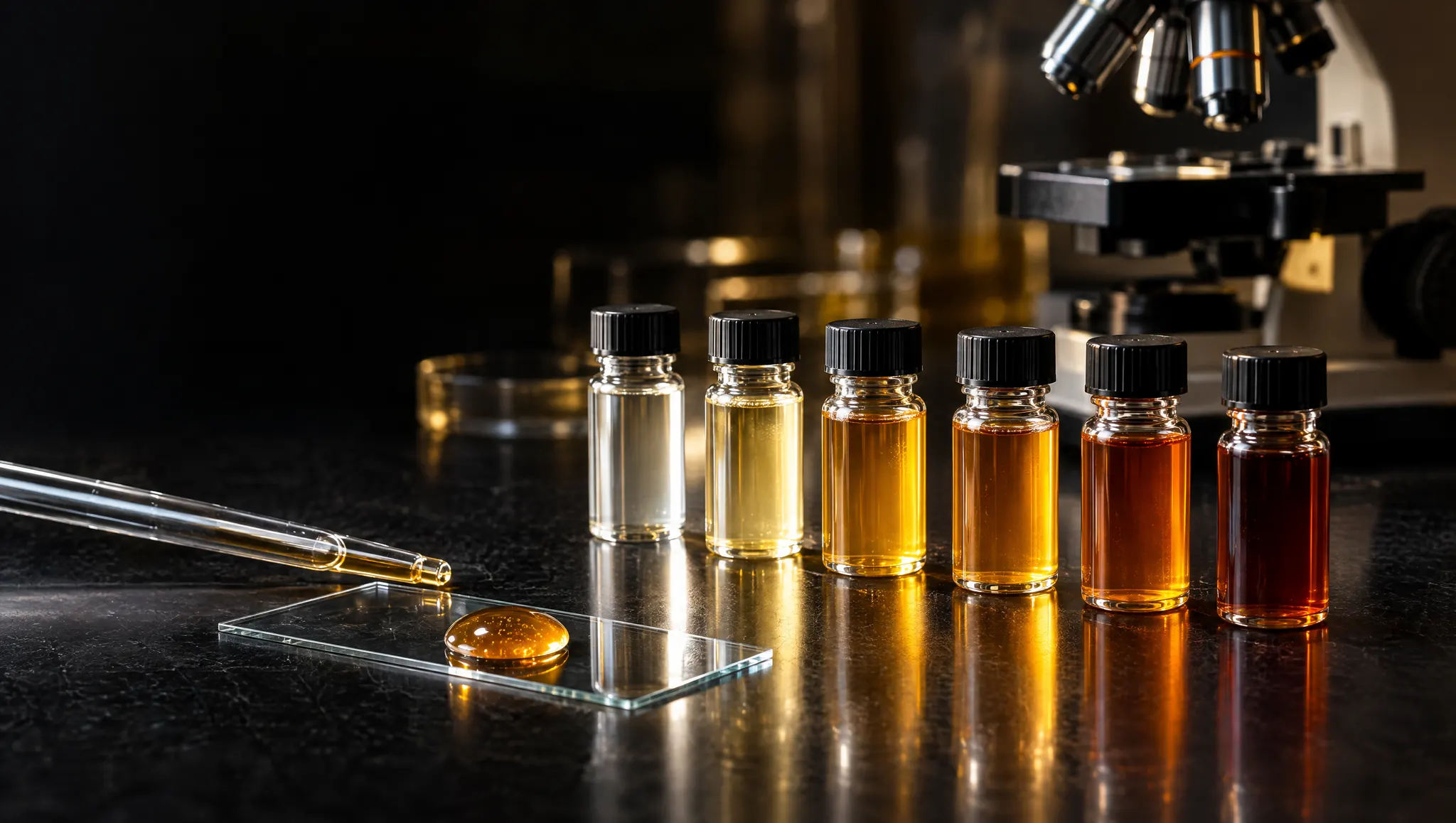
Mielovia Laboratory
Real molecular structures, a walk through the analysis bench, and the rules that separate research from claims.
Honey Molecular Lab · ball-and-stick
Real 3D conformers of the main compounds of honey. Structures match PubChem's identifiers and were optimised with the MMFF force field.
Known general composition. Concentrations of a specific lot appear only in its certificate.
Laboratory digital twin
A walk through the bench, from microscope to certificate. It ends with the lot's Honey Fingerprint, drawn from its own pollen spectrum.
Simulation · example data
Step 1
Science of the hive
A study is not a promise. Each level below has its own rules about what may be said.
Level 1
In vitro, animal and early human studies. Useful to understand honey, never a basis for a promise.
"Propolis fights infections"
Level 2
Systematic reviews and opinions of food safety authorities such as EFSA.
"Studied for its phenolic compounds"
Level 3
Only claims listed in the EU Register under Regulation (EC) No 1924/2006, with their conditions of use.
Checked in the Register before each use
Level 4
Label and website wording, limited to what the levels above allow.
"Monofloral mango honey, lot analysed"
Absolute rule
We never write that a food cures, treats or prevents a disease.
| What is measured | Method |
|---|---|
| Botanical origin | Melissopalynology (pollen counts under microscope) |
| Sugars | HPLC with refractive-index detection |
| Moisture | Refractometry |
| HMF | HPLC or spectrophotometry |
| Electrical conductivity | Conductimetry on a 20 % solution |
| Diastase activity | Schade or Phadebas method |
| Added C4 sugars | Stable carbon isotope ratio (AOAC 998.12) |
| Overall authenticity | NMR profiling, where used |
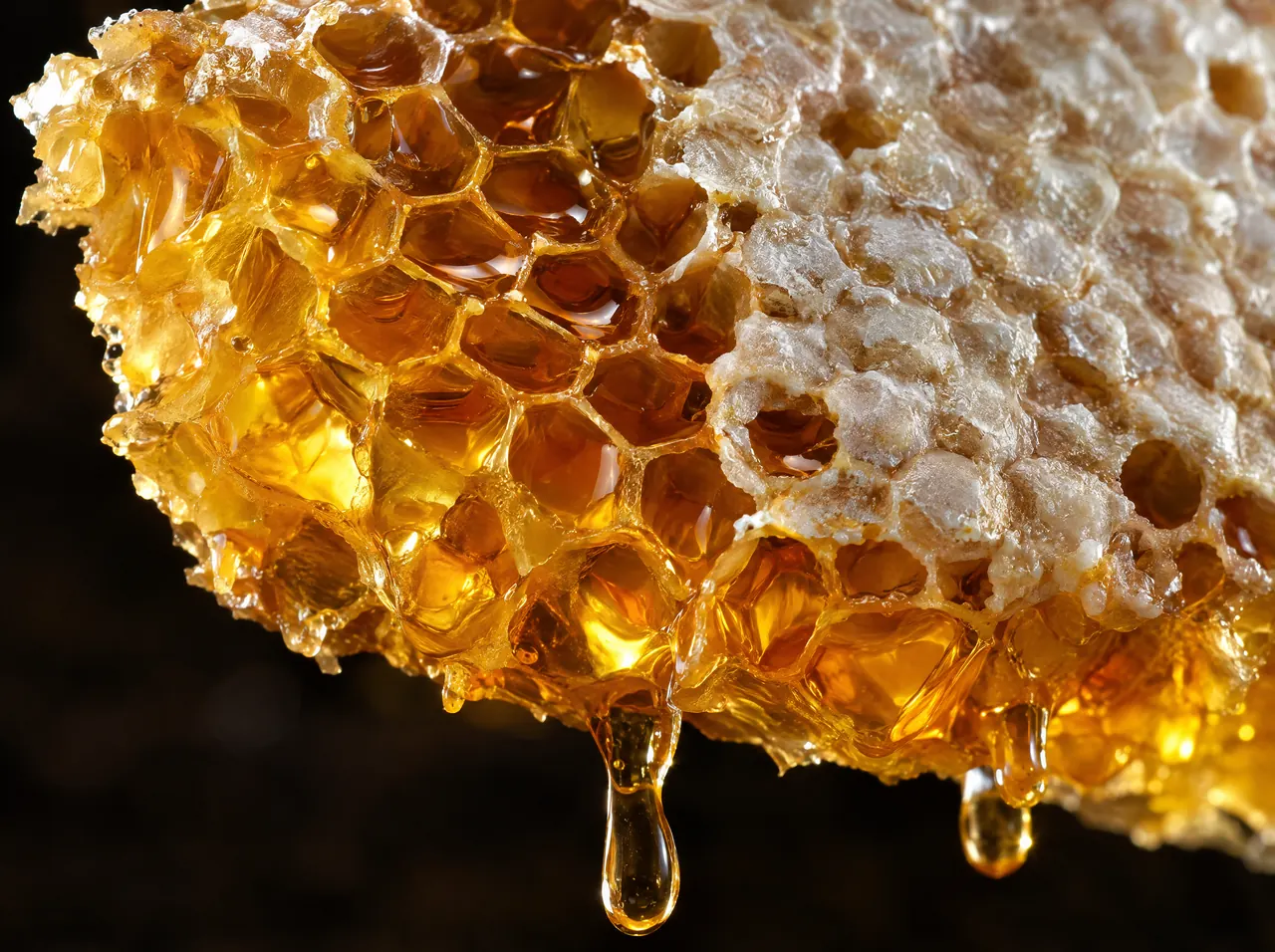
Mielovia Beyond honey
Royal jelly, pollen, propolis, wax, comb and bee bread, described for what they are.
Beyond honey
Described for what they are. No health claim is made for any of them.
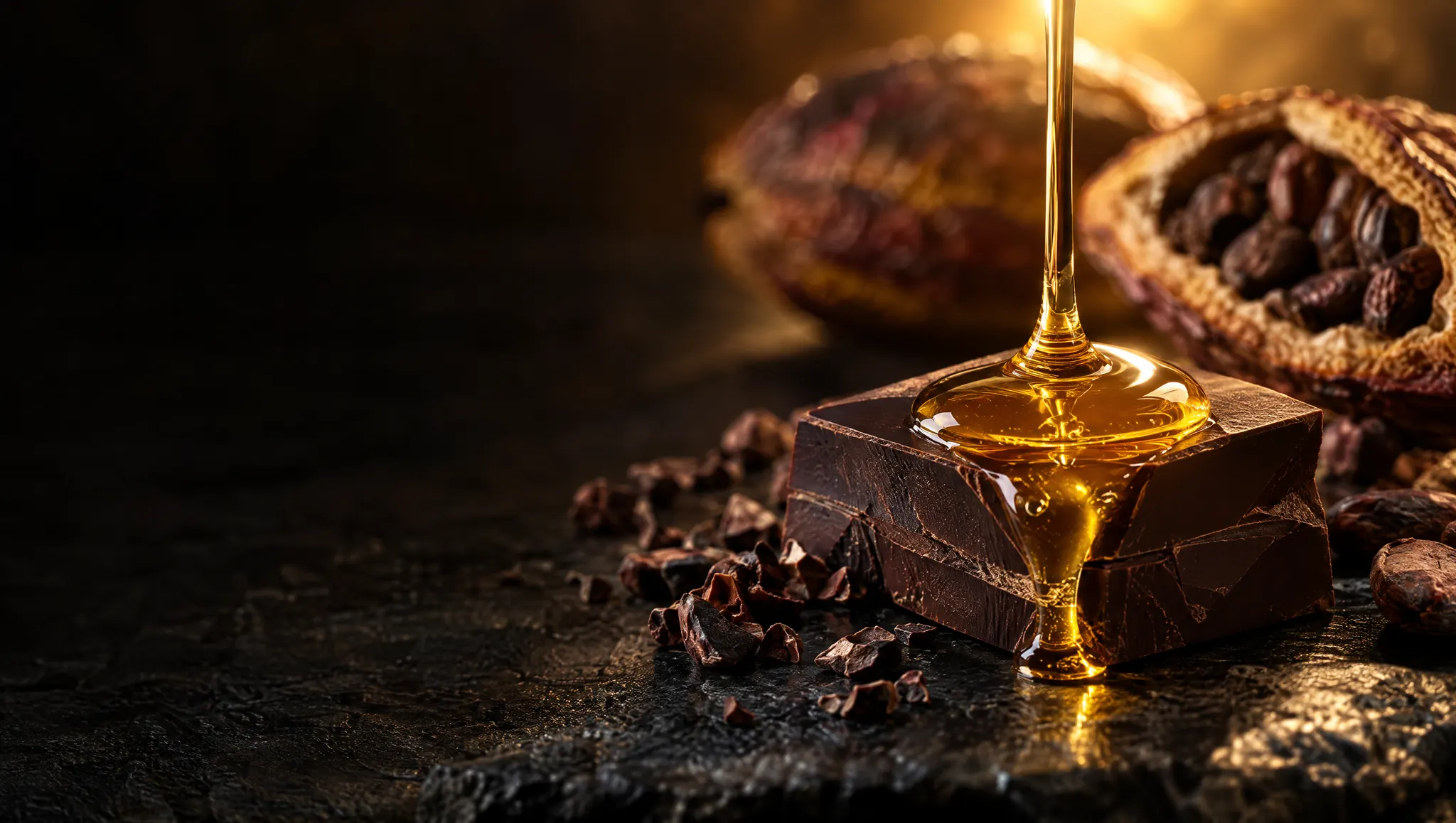
Mielovia For chocolatiers
A pairing model, samples, professional formats and whole-harvest reservations for chocolate houses, pastry chefs and R&D teams.
Honey × Chocolate Lab
Choose a chocolate and the profile you want. The model ranks honeys by aromatic fit and by how well their intensity holds against the cocoa.
Model on example sensory data
Dark 70 · Tropical
Professional portal
Samples, quotes, lot documents and future harvests in one account. Prices and stock below are examples.
Who it is for
Formats
Exclusive harvest
An apiary, a terroir, a season. The honey of that harvest goes to one house only, under its own lot codes.
Boeny, Madagascar · 120 hives in a mango orchard
Estimated harvest
1,850kg
Forecast example. Final volume depends on flowering and weather.
Season
Green: flowering · amber: harvest window (example).
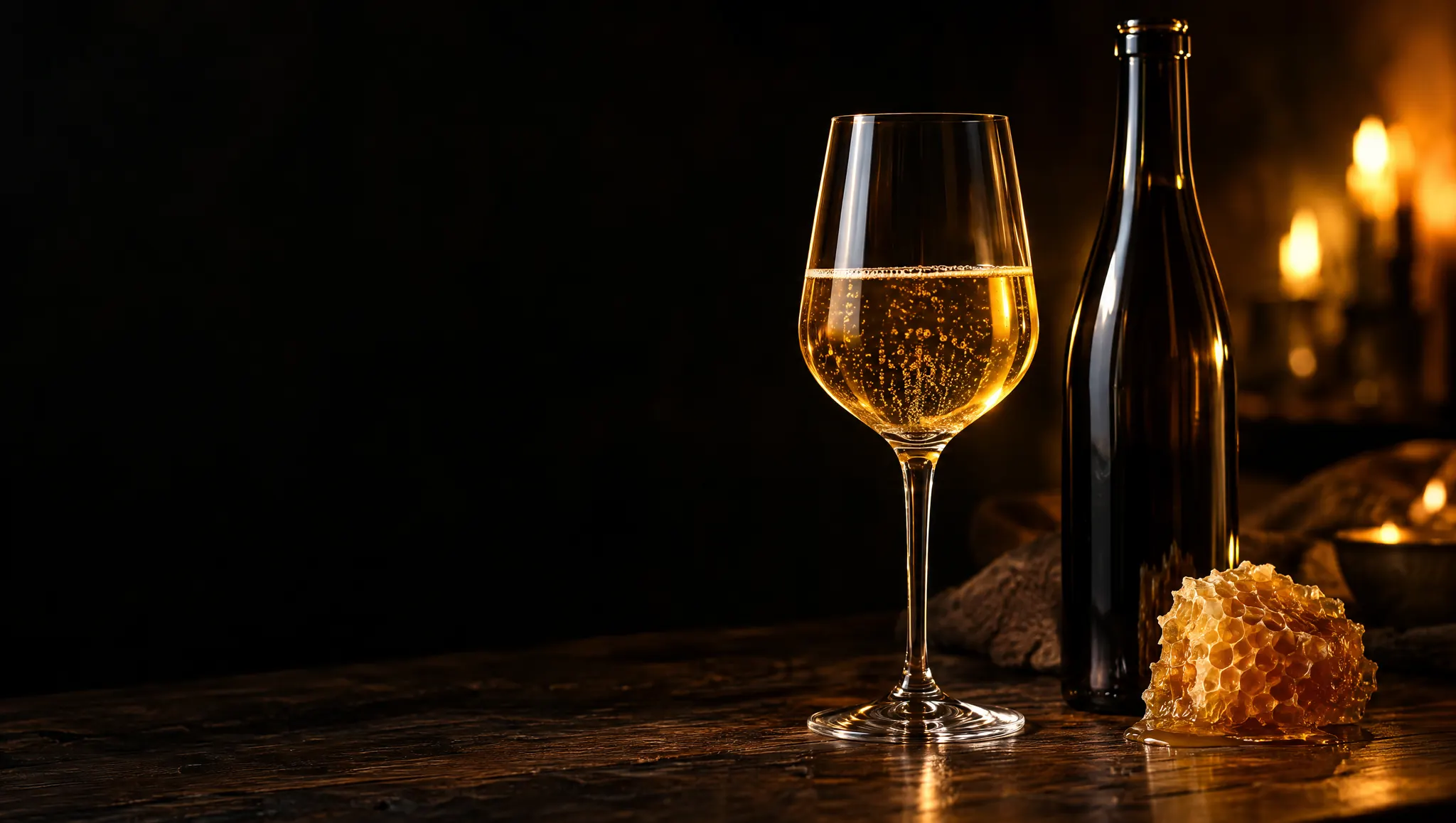
Mielovia Mead
Meads made from the honey of a single terroir, from dry to sparkling.
The Fermented Hive
Each mead starts from the honey of a single terroir, so the bottle tastes of the place the jar comes from.
Contains alcohol. Enjoy responsibly.
Honey
Boeny, Madagascar
Mead
Same apiary, same season
Process · example recipe values
Illustrative values, not a validated recipe. Alcohol is estimated from the density drop (1.100 → 1.000 gives about 13 % vol.).
Shop · Hive Collection
Thick glass, black lid, ivory label. Each terroir gets its own colour band, and the honey shows its real shade.
Honey
Retail
Professional
The honey shade follows the typical colour of each variety. Real jars show the lot's measured colour.